Pet freeze-drying and taxidermy in Parker
By our estimate, about 24,500 households in Parker have a dog or cat. Only a small share of families ever consider preservation, so if you're one of them, here's how to freeze your pet in time and what comes next.
- Clear steps for the first few hours
- Shipping frozen, explained plainly
- No pressure, we reply by email
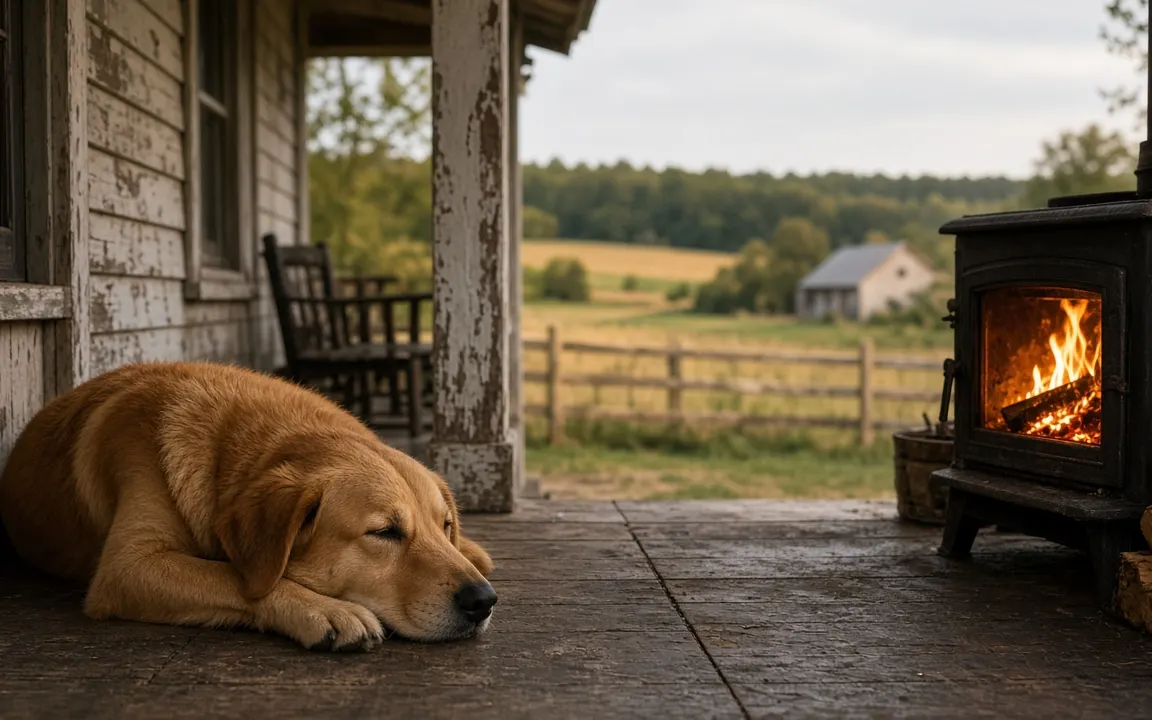
Parker, Colorado
Getting your pet frozen and to a specialist from Parker
Some Parker families honor a pet on the Cherry Creek trail at dawn, or with a small backyard gathering where neighbors share a story each. Others would rather keep the day private. Cremation is by far the usual choice in Colorado, for people as well as pets, so an urn on the shelf for years raises no questions. Choose what suits the animal and the people who loved it.
Parker has a great many young households, and for many children here a pet's death is the first loss they really grasp. Give them a role: laying a toy beside the pet, choosing a photo for the fridge, or writing a short message on a card. Use plain words about what happened. Children usually handle honest explanations far better than vague ones, and they tend to return to the subject over the following weeks.
Plenty of households around Parker already own a chest freezer for meat or garden produce. That's useful now. Clear a shelf or a corner, double-bag your pet with the air pressed out and keep them separate from food in their own bin or box. Set the freezer to its coldest and leave the lid shut, even when you'd like to look.
About 65,985 people live in Parker, which makes it the 19th-largest of the 36 Colorado communities we cover. The nearest larger centre is Aurora, about 16 miles (25 km) away, which is where some providers serving Parker are based.
Our pages for Centennial (8 miles), Castle Rock (10 miles) and Littleton (14 miles) describe the same choices from those towns' point of view, and the providers overlap, so a quote from one often covers Parker as well.
Our estimate
24,500
Estimated dog- or cat-owning households in Parker
How we calculated this
65,985 ÷ 2.5 = 26,394 households; × 53% (dog) + 39% (cat) = 24,500. A household with several pets counts once.
Our estimate
2,000
Estimated dog and cat losses in Parker each year
How we calculated this
24,500 dog/cat-owning homes ÷ average lifespan (dog: 12.69 yrs + cat: 11.18 yrs) ≈ 2,000 a year. Treat it as a minimum.
53%[1]
53% of US households own a dog, which is about 71 million households.
12.69 years[2]
US dogs have an average life expectancy at birth of 12.69 years.
39%[3]
39% of US households own a cat, which is about 53 million households.
11.18 years[4]
US cats seen at Banfield hospitals have an average life expectancy at birth of 11.18 years.
The published sources behind those figures are Montoya et al. 2023, Frontiers in Veterinary Science and American Pet Products Association (APPA) 2025 State of the Industry.
How Colorado thinks about cremation, and where preservation fits
With about 77.4%[5] of people in Colorado choosing cremation, most friends and relatives will assume your pet's ashes are coming home. A preserved pet can surprise people. It helps to have a simple sentence ready, such as that you wanted to keep them as they were. Nobody needs more than that, and most people understand once they see how much care went into it.
Source for the Colorado number: NFDA 2024 Cremation & Burial Report state projections (via Occasional Sage) (2024). Nobody publishes a pet cremation rate for Parker, so the human figure is the best local signal available.
Heat, cold and a freezer that mustn't fail in Parker
Frozen ground through January, February, March, November and December in Parker means burying anything you don't keep may have to wait until spring. That's fine. Whatever the practitioner returns, or your whole pet if you change your mind, can stay in the freezer until the soil softens. Label the bag clearly with your pet's name and the date so nobody opens it by mistake.
Cold, dry winter air in Parker is kind to freeze-dried work, but carrying a preserved pet from a cold car into a warm house can fog a glass case with condensation. If your pet comes home in January, leave the box closed indoors for an hour or two so it warms gradually before you unwrap it.

How much to budget for preservation
It helps to set preservation beside ordinary aftercare. Private dog cremation averages about $260[6] nationally, while one price guide puts freeze-drying a cat or little dog at $1,000–$2,500[7]. By our estimate, that makes freeze-drying roughly ten times the price of a private cremation[8]. Seen that way, a single preserved paw with the rest cremated can be a sensible middle path for families in Parker.
We keep the detailed Colorado price table on one page so it stays current: see Colorado prices.

Free tool
Freeze-dry & taxidermy cost estimator
Estimate cost and waiting time for freeze-drying or taxidermy by size and pose.
When the rules in Colorado come into play
Two kinds of rules can apply to a preserved pet. Wildlife rules come first: if your pet is a native wild bird, turtle, snake or other protected species, possessing or preserving them may need paperwork, even if you kept them legally for years. Then there are the ordinary aftercare rules on burial at home and scattering ashes, for any part of your pet you don't keep.
Not sure which office covers Parker? The Colorado local government directory is the official list.
Start with the Colorado rules, which cover burial, scattering and oversight for the whole state, and treat Parker's local ordinances as a possible extra layer.
A checklist for the first hours
- Tell your vet or clinic straight away that preservation is on the table; otherwise your pet may go out with the cremation pickup that afternoon.
- Lay your pet in a relaxed position on their side, legs gently folded, before the body stiffens. Don't wash or brush them.
- Double-bag them using two thick plastic bags, squeezing the air from each one before you close it.
- Put them in the coldest freezer available inside a few hours; a refrigerator isn't cold enough. Once they're in, resist the urge to open the bags and check.
- Take photos you already have and gather more: the face from different sides, the natural set of the ears, every marking. Your practitioner works from these.
- Choose a practitioner by their pet work, then make sure cost, deposit, return date and how they'll travel are written down before your pet leaves the house.
Caring for the piece, and for the memories
Grief does not always look like tears. In the weeks after a loss you might feel restless, flat or unusually tired, especially on evenings when the house suddenly seems quiet. That is common. If it persists, talk to your doctor or look for a counselor who understands pet bereavement. Some meet in the south metro area, and many offer phone or video sessions that fit around a commute.
The services page is the place to compare what is included, or compare your instinct with the poll results, try the free planning tools, there are guides for the big decisions and articles for the details. If you live between Parker and Aurora, Fort Collins, Colorado Springs and Lakewood, either page applies. Every other community in Colorado, and all of the United States, is listed too.

Reader polls
What would you choose?
Vote anonymously and see how other readers answered. The results are live counts from people who visit this site, so they show real opinions, not a scientific sample.
If you were preserving your pet, which route would you lean toward?
Tap an answer to vote and see how others answered. Anonymous.
If your pet died today, could you freeze them properly within a few hours?
Tap an answer to vote and see how others answered. Anonymous.
If you had to decide today, which aftercare would you choose for your pet?
Tap an answer to vote and see how others answered. Anonymous.


Questions people ask
When is the hardest time of year to arrange a burial in Parker?
January, February, March, November and December: average lows are below freezing then, and frozen ground makes a home grave slow or impossible until it thaws. The other pressure point is July, when highs around 90°F mean a body needs cooling and collecting quickly.
Is cremation common in Colorado?
For people, yes: about 77.4%[5] of Colorado deaths end in cremation, according to NFDA 2024 Cremation & Burial Report state projections (via Occasional Sage) (2024). Nobody publishes the same figure for pets, but in our experience pet choices in Parker follow the human pattern closely, so cremation is the default most families here start from.
Will I have to travel to Aurora to arrange things?
Not usually. Providers based in Aurora (roughly 16 miles from Parker) collect from here as a matter of routine, and the paperwork is done by email or phone. If you want to be present for a witnessed cremation, that is when the drive matters.
Is Parker big enough to have several pet aftercare providers?
Probably, on the numbers. By our estimate about 24,500 Parker households keep a dog or cat and around 2,000 lose one each year, which is enough steady demand to support more than one provider. We derive that from population (about 65,985), household size and national ownership and lifespan figures.
How do I look after a preserved pet at home?
Protect it from sunlight, damp and insects. Direct sun fades fur, humid air can soften freeze-dried tissue and moths or carpet beetles can damage fur over time. Keep the piece in a dry room away from bathrooms and heating vents, dust it with a soft makeup brush or a hair dryer on cool, and never wash it. A glass case helps with all three.
Can my rabbit be preserved if rabbit hemorrhagic disease is a concern?
Ask your vet first. The USDA advises rabbit owners not to dispose of a rabbit's body without consulting a veterinarian or animal health officials, because rabbit hemorrhagic disease kills 50-100%[10] of infected rabbits and spreads through carcasses. If your rabbit died suddenly, testing may come first. If disease is ruled out, preservation is usually straightforward.


Sources and our estimates
- [1] 53% of US households own a dog, which is about 71 million households. American Pet Products Association (APPA) 2025 State of the Industry, 2025.
- [2] US dogs have an average life expectancy at birth of 12.69 years. Montoya et al. 2023, Frontiers in Veterinary Science - Banfield Pet Hospital life expectancy tables (13.3 million dogs, 2.4 million cats, 2013-2019), 2023.
- [3] 39% of US households own a cat, which is about 53 million households. American Pet Products Association (APPA) 2025 State of the Industry, 2025.
- [4] US cats seen at Banfield hospitals have an average life expectancy at birth of 11.18 years. Montoya et al. 2023, Frontiers in Veterinary Science - Banfield Pet Hospital life expectancy tables (13.3 million dogs, 2.4 million cats, 2013-2019), 2023.
- [5] The NFDA projected Colorado's cremation rate at 77.4% for 2024. NFDA 2024 Cremation & Burial Report state projections (via Occasional Sage), 2024.
- [6] CareCredit's 2025 cost study put the US national average for private dog cremation at $260 (range $206-$473). CareCredit (Synchrony) - How Much Does It Cost To Euthanize a Dog? (2025 ASQ360 procedural cost study), 2025.
- [7] Memorials.com puts freeze-drying at $1,000–$2,500 for a cat or small dog and $2,000–$5,000+ for a medium to large dog. Memorials.com – Pet Taxidermy Guide, 2025.
- [8] Freeze-drying a cat or small dog costs about 10 times a private cremation. Our estimate: midpoint freeze-dry $1,750 ($1,000–$2,500) / $175 (private cremation 3–24 lb, NC provider). How we calculate.
- [9] Freeze-drying a 10 lb cat at one published price list would cost about USD 2,290–2,590. Our estimate: Low: 2,095 + 49 x (10-6) lb; High: 2,095 + 49 x 10 lb. How we calculate.
- [10] Rabbit hemorrhagic disease (RHDV2) kills 50-100% of infected rabbits; the first U.S. detection was in a pet rabbit in Ohio in 2018. USDA APHIS - Rabbit Hemorrhagic Disease, 2018.
Get pet preservation options in Parker
Tell us what you need and where you are. We'll reply by email with clear options and prices so you can decide in your own time.