Thinking about preserving your pet? Start with the right question
One US price guide puts freeze-drying a cat or small dog at about $1,000–$2,500[1], and the work often takes months. This short quiz helps you decide what to check first, before anything irreversible happens.
- Three questions, no account needed
- Points you to the guide you need now
- Nothing is sent to any studio

Pet Taxidermy & Preservation Services · planning preferences
Pet preservation and taxidermy: choose your next question
Use Pet Taxidermy & Preservation Services to choose your next pet preservation and taxidermy question, wherever you are worldwide. Select one guide topic, one detail to clarify and your current planning stage. The result repeats your choices and links to that guide. It does not estimate a price or confirm an arrangement.
Your choices stay in this page’s memory. They are shared only if you choose to send an email draft. Clear them below or reload to start again.
Prefer to ask our team directly?Question 1 of 3
Which decision would you like to explore first?
Pet Taxidermy & Preservation Services organizes this worldwide pet preservation and taxidermy selector around four guide topics. Choose the question closest to what you want to understand first. The next two choices identify one detail and your planning stage. You can change the topic later; selecting it does not submit an inquiry or authorize any arrangement.
Using the quiz
How the preservation quiz works
The quiz above asks three questions. First, which topic you want to explore: comparing taxidermy, freeze-drying and hybrid options; coping with grief while the work takes months; checking whether your pet is suitable; or combining a cast keepsake with cremation. Second, which detail you most need to clarify, from your pet's current condition to the stages where you'll approve the work. Third, where you are in deciding.
The result links to the matching guide and suggests one next step. It doesn't judge whether your pet can be preserved, estimate a price or contact anyone. Your answers stay in your browser unless you copy them or open an email draft.
You can go back a question or clear everything at any point. If you're considering preservation for a pet who is still alive, perhaps elderly or seriously ill, the quiz works the same way. Planning early gives you time to choose a studio, learn their handling instructions and take good photographs, which removes a great deal of pressure from the first hours later.
If it's urgent
If your pet has just died: the one thing to do first
If you're reading this in those first hours, choose "storage and handling history" as your detail in the quiz. It points you to the questions a studio will ask, like when your pet died, where they've been kept and whether they were frozen. Our guide to suitability checks before authorizing preservation covers what studios look for. The ASPCA's end-of-life care guide also covers handling a pet's body at home.
If your pet died today, could you freeze them properly within a few hours?
Tap an answer to vote and see how others answered. Anonymous.
The main choice
Taxidermy, freeze-drying or something lighter
Traditional taxidermy preserves the skin over a sculpted form. Freeze-drying removes moisture from the whole body at very low temperatures, keeping the pet's own shape; one market report puts it at about 62.3%[2] of the pet preservation market. Traditional taxidermy for a cat or small dog costs about $800–$2,500[3] in one US price guide, and more for larger dogs.
Some families decide full preservation isn't right and choose a partial keepsake instead: a paw cast, a fur clipping, a feather or tail, alongside cremation. The guide to taxidermy, freeze-dry and hybrid alternatives compares them honestly, and our post on paw casts, fur and lighter keepsakes covers the gentler end. The services overview describes each craft.
Freeze-drying suits smaller animals best: cats, small dogs, rabbits, birds and reptiles. Very large dogs can be freeze-dried, but the cost and the wait both climb steeply, and some studios cap the size they accept. Traditional taxidermy is more common for larger animals and for birds with delicate plumage. Ask each studio which method they recommend for your pet and why, rather than assuming one is always better. If a bird you're thinking of is a wild one rather than a pet, check the Migratory Bird Treaty Act first; native species are protected.
What you'll see
Pose, reference photos and realistic expectations
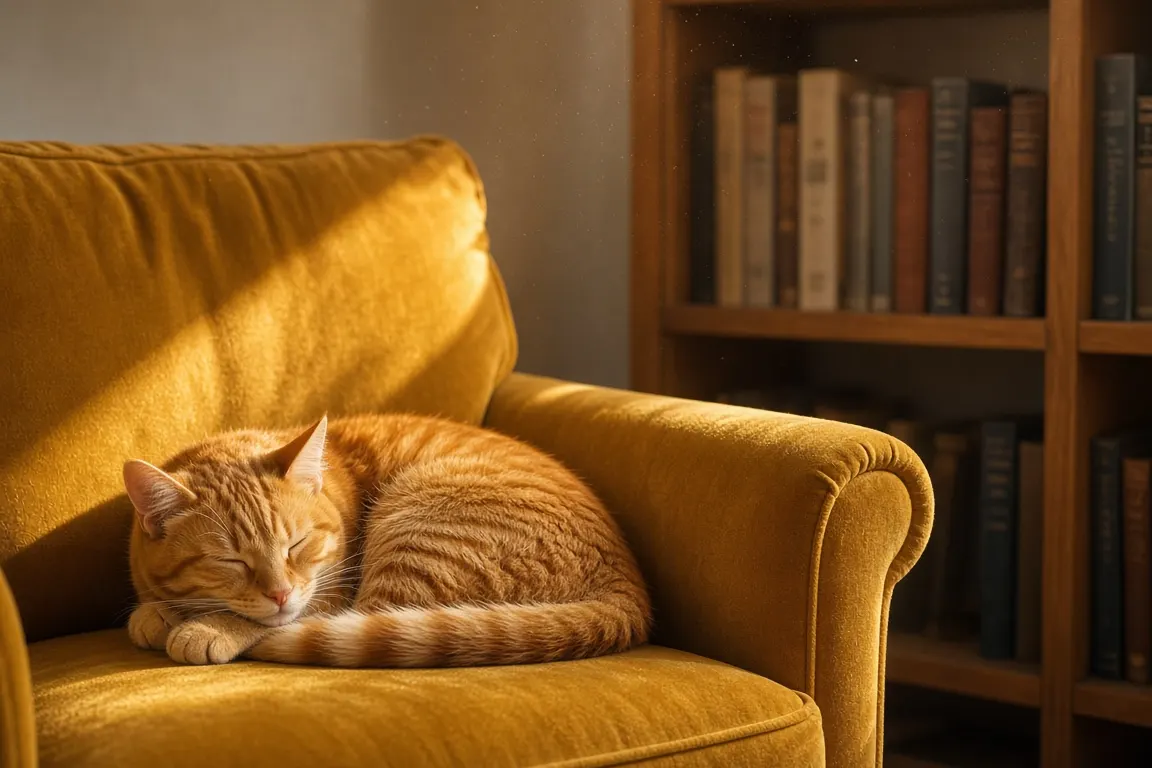
Preserved pets rarely look exactly as they did in life. Eyes are replaced, and expression depends on the skill of the preparer and on the pose. Some preparers suggest a sleeping or curled pose, which can look more natural than an alert one. Good reference photos, taken in daylight from several angles, help the studio capture your pet's features.
Which pose feels most like your pet?
Tap an answer to vote and see how others answered. Anonymous.
If you choose "requested technique and pose" in the quiz, gather your photos first. Our post on questions for a pet preparer lists what to ask about eyes, pose and revisions.
It also helps to picture where the finished piece will live. A preserved pet on a shelf in the living room is a very different daily experience from one in a quiet study, and other people in the household may feel differently about it than you do. Talking that through now avoids difficult surprises when the piece comes home.
Time and cost
How long it takes, and what it costs
Both taxidermy and freeze-drying typically take 6–12 months[4], sometimes longer. One Ohio studio charges 50% extra for a VIP service that cuts turnaround to six to eight weeks[5]. For many families, the wait is the hardest part, which is why we wrote a guide to grief while preservation work takes months.

Free tool
Freeze-dry & taxidermy cost estimator
Estimate cost and waiting time for freeze-drying or taxidermy by size and pose.
Our preservation cost estimator gives a range by method and size. One price guide says custom bases or positioning can add $150–$800[6], so ask what's included before you sign. Our calculation puts freeze-drying a small pet at roughly ten times the price of a private cremation[7], which is why lighter keepsakes are worth a look. Our locations pages explain how to reach studios, and the poll results show how other readers answered these questions.

Reader polls
What would you choose?
Vote anonymously and see how other readers answered. The results are live counts from people who visit this site, so they show real opinions, not a scientific sample.
If you were preserving your pet, which route would you lean toward?
Tap an answer to vote and see how others answered. Anonymous.
If your pet died today, could you freeze them properly within a few hours?
Tap an answer to vote and see how others answered. Anonymous.
Which memorial feels most like your pet?
Tap an answer to vote and see how others answered. Anonymous.


Questions people ask
Can the quiz tell me if my pet can be preserved?
No. Only a studio that knows your pet's species, condition and handling history can say that. The quiz helps you decide which question to ask first and links to a guide that explains what studios usually check.
Should I freeze my pet if I'm considering preservation?
Ask a studio before you do anything. Many prefer prompt freezing in a particular way, but requirements differ, and some handling can limit what's possible. Keep your pet cool and undisturbed until you have their instructions.
Is freeze-drying or taxidermy more expensive?
For small pets, published US prices overlap: one guide puts taxidermy at about $800 to $2,500 and freeze-drying at $1,000 to $2,500 for a cat or small dog. For larger dogs, both rise steeply. Get a written quote that lists pose, base and shipping.
What if my family disagrees about preserving our pet?
It's common. Preservation is a strong choice and not everyone will want to see the result every day. A partial keepsake, such as a paw cast, or a preserved piece kept in a private room, can be a middle ground.
Are my quiz answers sent to a studio?
No. They stay in your browser while the page is open. Nothing goes to us or any studio unless you open the email draft and send it yourself, or send the request form on this page.


Sources and our estimates
- [1] Memorials.com puts freeze-drying at $1,000–$2,500 for a cat or small dog and $2,000–$5,000+ for a medium to large dog. Memorials.com – Pet Taxidermy Guide, 2025.
- [2] Freeze-drying accounted for 62.3% of the pet preservation services market. Astute Analytica via GlobeNewswire — Global Pet Preservation Services Market to Hit USD 112.7 Million by 2032 (Apr 2, 2024), 2023.
- [3] Memorials.com puts traditional taxidermy at $800–$2,500 for a cat or small dog and $1,500–$5,000+ for a medium to large dog. Memorials.com – Pet Taxidermy Guide, 2025.
- [4] Both traditional taxidermy and freeze-drying typically take 6–12 months, sometimes longer. Memorials.com – Pet Taxidermy Guide, 2025.
- [5] Paying 50% extra for VIP service cuts freeze-dry turnaround to 6–8 weeks at Animal Family Pet Preservation. Animal Family Pet Preservation – Pricing, 2026.
- [6] Taxidermy and freeze-drying add-ons such as custom bases or positioning cost about $150–$800. Memorials.com – Pet Taxidermy Guide, 2025.
- [7] Freeze-drying a cat or small dog costs about 10 times a private cremation. Our estimate: midpoint freeze-dry $1,750 ($1,000–$2,500) / $175 (private cremation 3–24 lb, NC provider). How we calculate.
Ask about pet preservation options
Tell us what you need and where you are. We'll reply by email with clear options and prices so you can decide in your own time.