Alternatives to pet taxidermy, from a whole freeze-dried pet to a single paw
If a full taxidermy mount doesn't feel right, the main alternatives are freeze-drying the whole body, preserving just one part, an articulated skeleton, a cast of the paws or nose, or cremation paired with small keepsakes. Only ~7%[1] of owners choose taxidermy, by one market estimate, so looking at other routes is completely normal.
By the Pet Taxidermy & Preservation Services editorial team · Updated September 24, 2026 · 4 min read · Sources
- Seven routes compared on cost, wait and look
- Which options can be combined with cremation
- What has to happen before your pet leaves home
The quick version
What are the real alternatives to a full taxidermy mount?
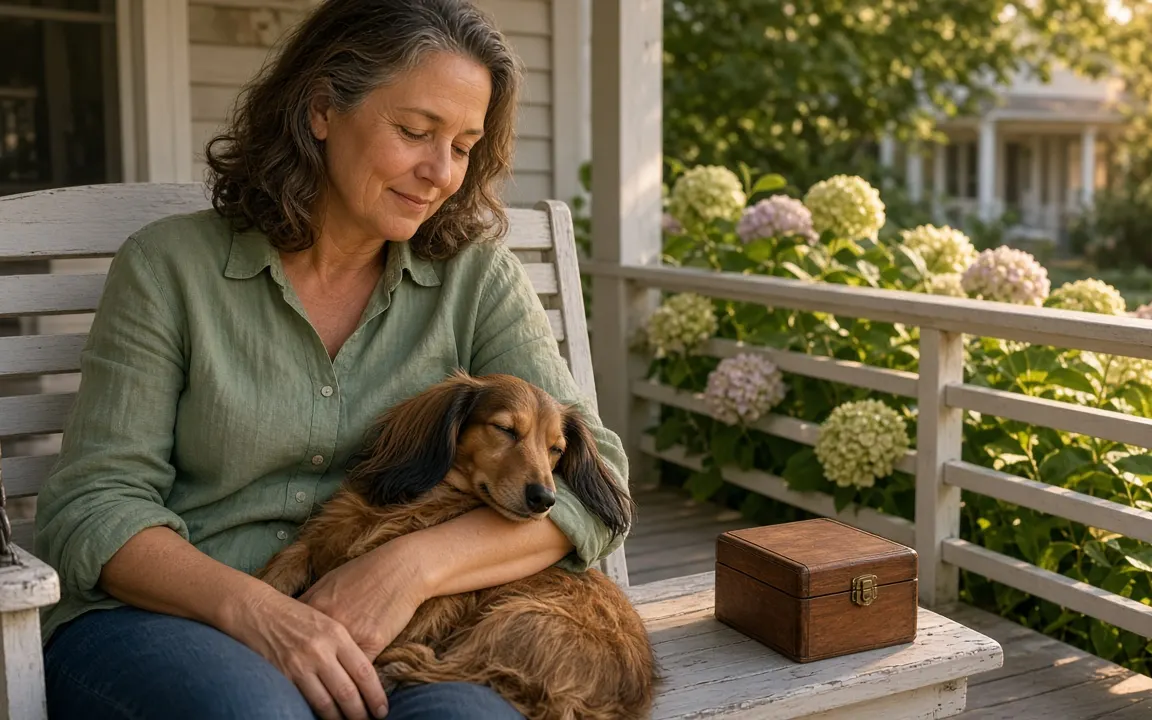
Think of the choices as a sliding scale of how much of your pet you keep. At one end is the whole animal, either freeze-dried or mounted. In the middle are single parts: a paw, a tail, a wing, a skull. At the far end are things made from your pet rather than of them, like a resin cast, a clay print or a lock of fur, usually alongside cremation.
Families often start at the whole-body end, then slide toward the middle once they learn the cost and the wait. That isn't settling for less. Plenty of owners find a paw they can hold in one hand easier to live with than a full-size pet on the sofa. The services overview describes each craft in more detail if you're new to all of this.
| Option | What you keep | Typical cost | Typical wait |
|---|---|---|---|
| Freeze-dried whole pet | The actual body, posed | USD 1,000–2,000 for most pets[2] | Months; longer for big dogs |
| Traditional taxidermy | Tanned skin on a sculpted form | $800–$2,500 for a cat or small dog[3] | 6–12 months is common[4] |
| Single part (paw, tail, wing) | One piece, rest cremated | Quote-based; much less than a whole pet | Usually shorter than a full body |
| Articulated skeleton | Cleaned, rebuilt bones | £550 for a cat in the UK[5] | Varies by studio |
| Paw pad or nose cast | A copy in resin or metal | From about £120 for a small dog[6] | A few weeks |
| Clay print or fur clipping | An impression or a lock of fur | $49–$133 through one US network[7] | Days to weeks |
Keeping the whole pet
Is freeze-drying a gentler alternative to taxidermy?
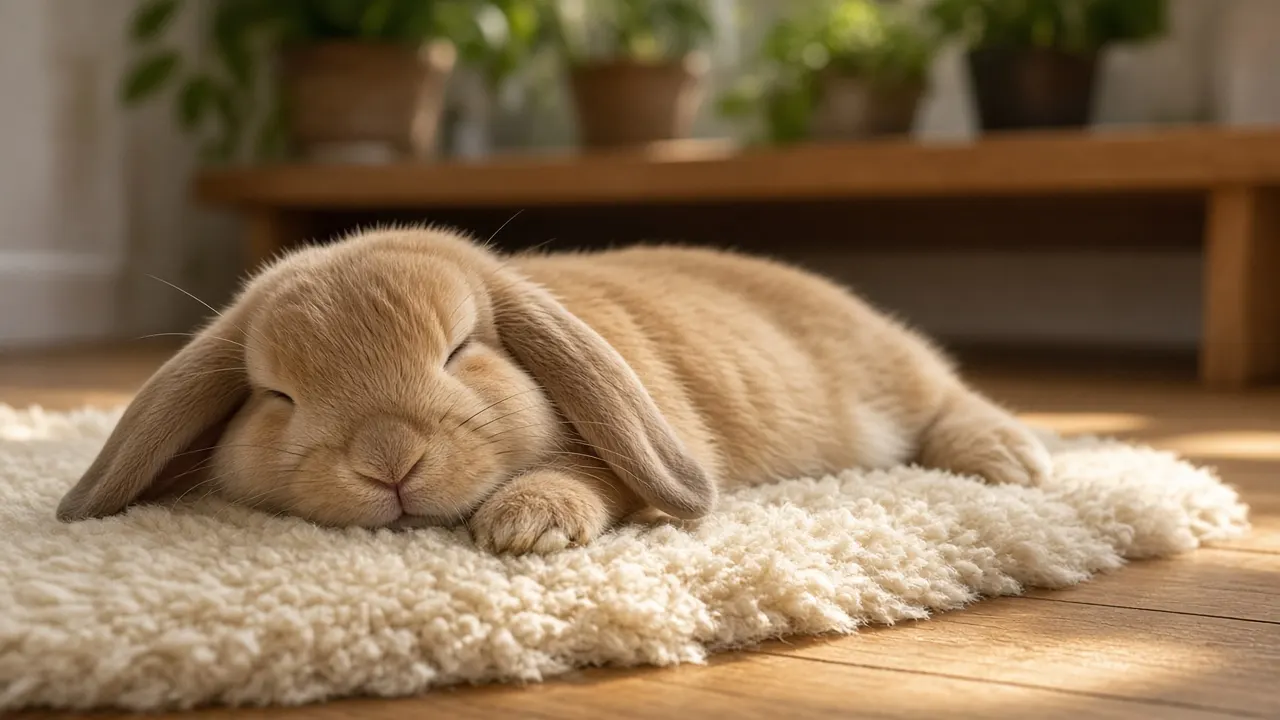
For most cats, small dogs, rabbits and pocket pets, yes. Freeze-drying keeps the body itself rather than stretching skin over a form, so body shape and the feel of the fur are your pet's own. One market report puts it at 62.3%[8] of the pet preservation market, which suggests most families who want the whole animal now go this way.
Its limits are poses and size. Curled-up and lying-down positions come out well; a dog standing on four legs or a cat mid-stretch is harder, and those are the jobs where a taxidermist's sculpted form still wins. Large dogs also push the price up steeply because the chamber runs for so long. If you're torn between the two crafts, freeze-drying vs taxidermy sets them side by side.
Keeping one part
Can you preserve just a paw, tail or wing?
Yes, and many practitioners are glad to do it. A single freeze-dried or tanned paw is small enough to hold, and it doesn't carry the jolt some people feel seeing a whole pet on a shelf. For birds, a spread wing or a fan of tail feathers mounted in a shadow box is one of the most popular requests. The rest of your pet then goes on to cremation or burial as normal.
The part has to be removed before cremation, which means planning the order of events. Our hybrid cast plus cremation guide explains how to line up the preserver and the crematory so nothing gets missed. If you're drawn to this route, you can see how other readers answered in the poll below and on the live poll results page.
If you kept only part of your pet, what would it be?
Tap an answer to vote and see how others answered. Anonymous.
For the curious
What about a skull or articulated skeleton?
Bone work suits people who love anatomy, or who find fur and faces too emotional but still want something real. The preparer cleans the bones, often using colonies of flesh-eating dermestid beetles, the same insects museums work hard to keep away from their collections, whitens them, then either presents the skull on its own or wires every bone back into a standing skeleton. A finished skeleton is permanent, light and doesn't mind humidity the way fur does; the Canadian Conservation Institute's guide to relative humidity explains why skin and fur are so sensitive to damp.
Prices scale with size. One UK studio charges £500–£2,000[5] depending on breed, from a Chihuahua to a Great Dane. It's rarer in the US, so expect to ship your pet frozen to a specialist; the locations page explains how that usually works when the right person lives far away.
Nothing of the body kept
Which alternatives don't involve preserving the body at all?
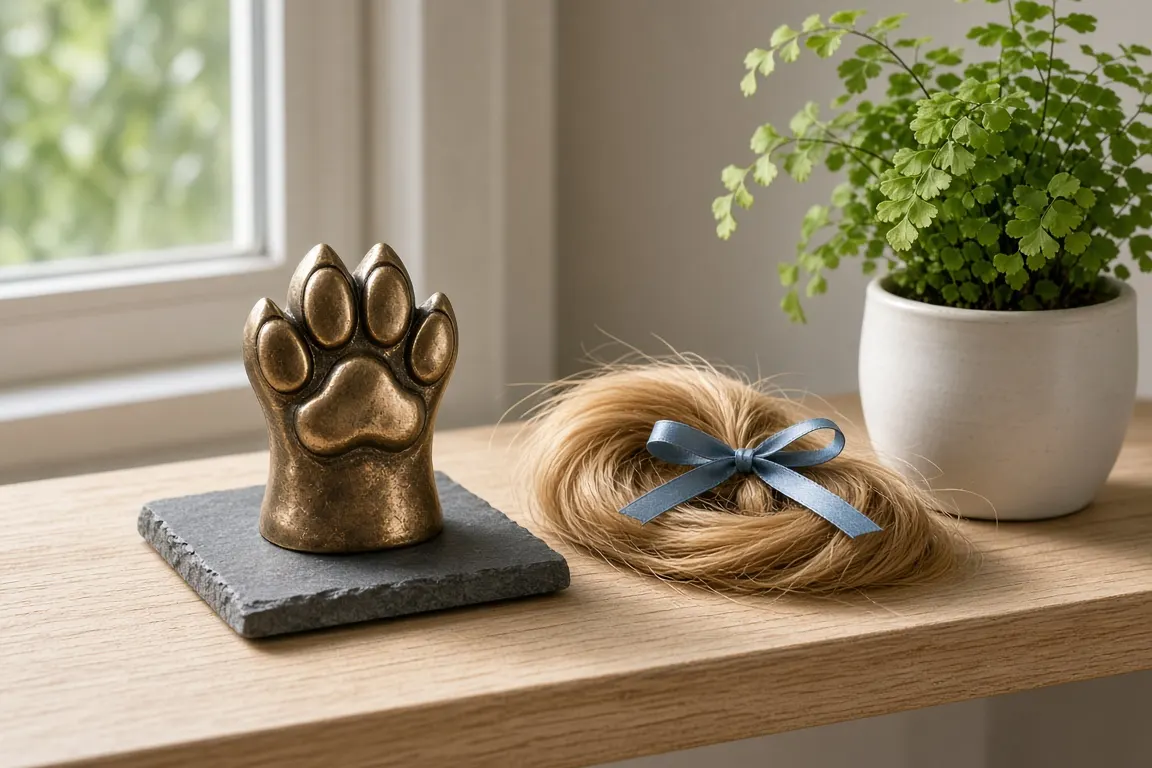
Casts, prints and fur keepsakes capture your pet's shape or texture while the body is cremated or buried. A resin cast of the paw pads shows every crease; a clay nose print catches the little pattern that's as unique as a fingerprint. These are affordable: one US cremation network charges $49–$133[7] for prints, framed prints and fur clippings.
- Resin or bronze paw casts: taken from a mold pressed around the pads, then poured and finished.
- Clay or ink prints: the simplest option, and often included in a cremation package.
- Fur clippings: a lock tied with ribbon, set into resin, or placed inside a locket.
- Commissioned portraits or sculptures: made from photos, so nothing needs to be taken from your pet at all.
There's a fuller list with prices in our post on paw casts, fur and lighter keepsakes.
Making the call
How do you choose between these options?
Three questions sort most families quickly. First, would seeing your pet's face every day comfort you or unsettle you? If you're not sure, choose a part or a copy. Second, what can you spend? A whole freeze-dried dog can cost several times what a paw and a private cremation do together: by our estimate, one studio's per-pound list works out to ~$4,851[9] for a 50 lb dog. Third, can you wait? Whole-body work takes months, while a cast is back in weeks.
Run your pet's weight through the preservation cost estimator to see what a whole-body job might cost, then compare it with a smaller plan in the memorial budget planner.

Free tool
Freeze-dry & taxidermy cost estimator
Estimate cost and waiting time for freeze-drying or taxidermy by size and pose.

Reader polls
What would you choose?
Vote anonymously and see how other readers answered. The results are live counts from people who visit this site, so they show real opinions, not a scientific sample.
If you kept only part of your pet, what would it be?
Tap an answer to vote and see how others answered. Anonymous.
If you were preserving your pet, which route would you lean toward?
Tap an answer to vote and see how others answered. Anonymous.
Which memorial feels most like your pet?
Tap an answer to vote and see how others answered. Anonymous.

Questions people ask
What is the cheapest alternative to pet taxidermy?
A clay or ink paw print, or a lock of fur, is the least expensive. Many crematories include a print in their package or charge a small add-on; one US crematory lists a clay paw impression at $10 and a fur clipping at $5[10]. A resin cast of the paw pads costs more but is still far below whole-body preservation.
Can I freeze-dry part of my pet and cremate the rest?
Yes. Many practitioners will preserve a paw, tail, ear or wing and then either return the rest of your pet frozen or pass them to a crematory you choose. The key is arranging the order in writing before anyone starts work, so the crematory knows a part has been kept and the preserver knows where the rest is going.
Is freeze-drying the same as taxidermy?
No. Taxidermy removes and tans the skin, then fits it over a sculpted form with glass eyes. Freeze-drying keeps the whole body and removes the water slowly in a vacuum chamber. Freeze-drying suits resting poses; taxidermy handles standing or alert poses better. Both are done by specialists, and some studios offer both.
Do paw casts need to be made before cremation?
A cast taken directly from the paw does, because it needs a mold of the actual pads. Once your pet is cremated, you can only make pieces from photos or from a print taken earlier. If there's any chance you'll want a cast, ask your vet or crematory to take an impression or hold your pet frozen until it's done.
Will a skeleton look upsetting on display?
For most people it looks more like a museum piece than a pet, which is exactly why some families prefer it. A cleaned skull in a small glass case is subtle. A full articulated skeleton is more striking, so think about who visits your home and whether they'd be comfortable before you commit.
Can I change my mind after choosing an alternative?
Only until the irreversible step happens. Cremation ends every preservation option, and a preserver who has started tanning or freeze-drying can't undo it. While your pet is frozen and untouched, you can switch freely, so it's worth taking a few days before signing anything.
Keep reading

Casts plus cremation
How to take a cast or keep a paw before cremation.

Every preservation service explained
Freeze-dry, taxidermy, partial and skeletal work side by side.

Estimate your cost
Price and wait by size, method and pose.

Ask what's realistic for your pet
We'll email options from practitioners who take your species.
Sources and our estimates
- [1] About 7% of pet owners choose taxidermy, per Astute Analytica. Astute Analytica via GlobeNewswire — Global Pet Preservation Services Market to Hit USD 112.7 Million by 2032 (Apr 2, 2024), 2024.
- [2] Freeze-drying a pet typically costs USD 1,000–2,000. Astute Analytica via GlobeNewswire — Global Pet Preservation Services Market to Hit USD 112.7 Million by 2032 (Apr 2, 2024), 2024.
- [3] Memorials.com puts traditional taxidermy at $800–$2,500 for a cat or small dog and $1,500–$5,000+ for a medium to large dog. Memorials.com – Pet Taxidermy Guide, 2025.
- [4] Both traditional taxidermy and freeze-drying typically take 6–12 months, sometimes longer. Memorials.com – Pet Taxidermy Guide, 2025.
- [5] UK studio Skeletons UK articulates pet skeletons from £500 (Chihuahua) to £2,000 (Great Dane); a cat costs £550, or £700 cased. Skeletons UK – Pet memorials, 2026.
- [6] Brighton Body Casting in the UK charges from about £120 to cast a small dog's paw pads in resin; medium and large breeds cost about 1/5 and 1/3 more. Brighton Body Casting – Pets, 2026.
- [7] Final Gift charges $49 for ink paw prints, $76 for a clay or silver-clay paw print, $111 framed, and $133 framed with a fur clipping; a fur clipping alone costs $23. Final Gift Pet Memorial Center – Memorial Products, 2026.
- [8] Freeze-drying accounted for 62.3% of the pet preservation services market. Astute Analytica via GlobeNewswire — Global Pet Preservation Services Market to Hit USD 112.7 Million by 2032 (Apr 2, 2024), 2023.
- [9] On a per-pound-above-threshold reading of its price list, one Ohio studio would charge about $4,851 to freeze-dry a 50 lb dog. Our estimate: $2,781 + $69 × (50 − 20) lb. How we calculate.
- [10] Memorial add-ons at A Greener Place: $15 laser-engraved paw print, $10 clay paw impression, $10 nose print, $5 fur clipping. A Greener Place Pet Aquamation – Pricing, 2026.
Find out which options fit your pet
Tell us what you need and where you are. We'll reply by email with clear options and prices so you can decide in your own time.