Pet Preservation in South Dakota
Most preserved pets take half a year or more to come home. Whether you're planning ahead or facing it today in South Dakota, here is the order to do things in, and what can safely wait.
- Freeze first, decide later
- Published prices by pet size
- Help finding a specialist who takes your species

South Dakota, the United States
Pet Preservation in South Dakota: what to know
Most families in South Dakota who ask about preservation don't end up with a full-body piece. Some choose a preserved paw or tail with the rest cremated; others keep a lock of fur and a paw print. All of those start the same way, with your pet frozen quickly, so freezing never closes a door.
Practitioners who accept pets from South Dakota are usually chosen for their finished animals, not their address. Before contacting anyone, gather your pet's species and weight, a few clear photos and a note of when they died and when they were frozen. With that, a practitioner can give you a straight answer about suitability in a single email.
We cover 10 communities in South Dakota, from Sioux Falls, Rapid City and Aberdeen to smaller towns. Conditions vary a lot across South Dakota: summer highs reach about 87°F in Yankton, while winter lows average 2°F in Aberdeen. In 100% of the South Dakota communities we cover, average lows drop below freezing for three months or more, which matters for home burial.
Our estimate
165,000
Estimated pet-owning households across the communities we cover in South Dakota
How we calculated this
The sum of our per-city estimates for the 10 communities in South Dakota on this site: each city's population ÷ national average household size × the national share of households with a pet. Households with several pets count once.

Every South Dakota community we cover
Choose your city or town for local prices, weather and timing, and rules. 10 communities in South Dakota, largest first below.
How South Dakota thinks about cremation, and where preservation fits
About 53.2%[1] of people in South Dakota choose cremation. Attitudes are shifting, and that openness extends to pets, where families increasingly want something personal rather than the standard option. Preservation is the most personal of all, and still unusual. Expect to explain what you want to your vet more than once, and to find the practitioner yourself.
NFDA 2024 Cremation & Burial Report state projections (via Occasional Sage) (2024) publishes the South Dakota rate we quote. Read it as the local custom around cremation rather than as pet data.
How much to budget for preservation
Birds, reptiles and small mammals have their own price points. One US studio lists $650–$1,350[2] for a small bird, with bearded dragons around $850 and hedgehogs, rats or ferrets around $950[2]. Small pets also ship in smaller coolers with less dry ice, so the total from South Dakota is usually far lower than for a cat or dog.
Pet preservation is priced by weight, method and pose, not by city, so what you'd pay from South Dakota depends mostly on your pet and the practitioner you choose. One US price guide quotes freeze-drying a cat or small dog at $1,000–$2,500[3] and traditional taxidermy at $800–$2,500[4]. Large dogs cost several thousand dollars more. The published prices below come from US price lists and cost guides.
| Pet and method | Published price | Typical wait |
|---|---|---|
| Freeze-dried pet under 1 lb (hamster, budgie, small lizard) | USD 650[5] | 4 to 6 months[5] |
| Freeze-dried pet of 1 to 6 lb | $1,250–$2,095[6] | 6 to 8 months[6] |
| Freeze-dried cat or small dog | $1,000–$2,500[3] | 6–12 months[7] |
| Traditional taxidermy, cat or small dog | $800–$2,500[4] | 6–12 months[7] |
| Freeze-dried dog over 20 lb | $2,781 + $69/lb[8] | 7+ months[9] |
| Custom base, pose or positioning | $150–$800[10] | Added to the total |
To check the figures yourself, see Animal Family Pet and Memorials.com.

Free tool
Freeze-dry & taxidermy cost estimator
Estimate cost and waiting time for freeze-drying or taxidermy by size and pose.
What South Dakota rules mean for a preserved pet
Keeping a preserved pet you loved is legal almost everywhere, but selling or passing on some preserved species later can be restricted, especially birds and reptiles covered by wildlife-trade rules. Keep the practitioner's invoice, your pet's purchase or breeder records and any permits with the finished piece, so its origin is never in doubt. Remains you don't keep follow the South Dakota guidance below.
- Burial at home: Confirm the rule for the actual parcel and proposed burial with the local authority and property owner.
- Scattering ashes: Ask the exact land manager about scattering before making arrangements; a general gathering permission is a separate matter.
- Who oversees it: the authority responsible for the specific activity and location; this guide does not identify a universal permit or licensing rule
- Worth knowing: Record the service method, release authority, identification and return instructions in writing.
A city's population does not establish which aftercare activities are allowed at an address. Check the actual site and activity before proceeding.
County and city offices set many of the local rules. To find yours, start with the official South Dakota local government directory.
A checklist for the first hours
- Raise preservation before the euthanasia appointment rather than after it, which gives the clinic time to work out where your pet will go afterward.
- Ask the vet to clip as little fur as possible when placing the catheter or giving the injection, and find out which leg they intend to use.
- Bring a towel and a sturdy cooler so there's no delay between the appointment and a freezer, whether that's at home or at the clinic.
- Take your time saying goodbye, then settle your pet into the curled or resting shape you'd like before their body stiffens.
- If you've already picked a practitioner, ask them beforehand how they want your pet bagged and shaped for freezing.
- Note the time of death and the time of freezing on your phone. Every practitioner will ask for both.
Once the finished piece is home in South Dakota
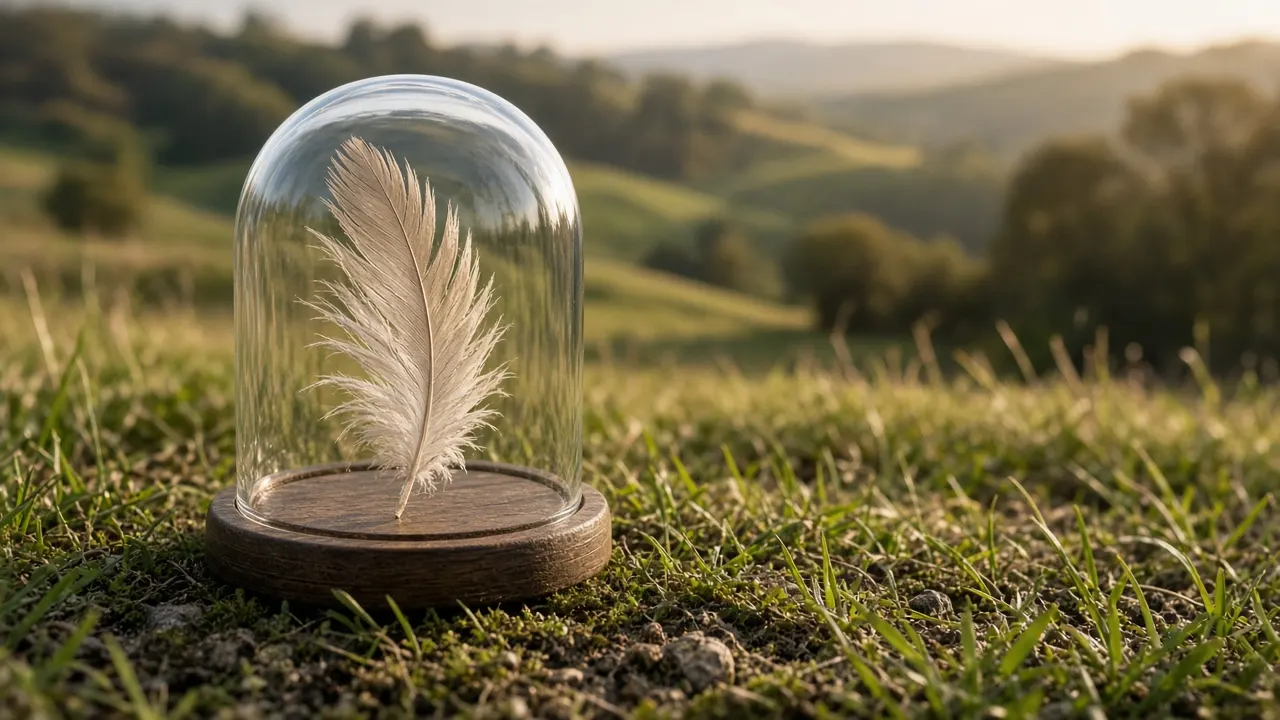
A glass dome or case is worth considering for any preserved pet. It keeps dust, insects and curious hands off delicate work, evens out humidity and makes the piece feel intentional rather than just placed on a chair. Ask your practitioner for the case dimensions they'd recommend, and budget for it alongside the preservation itself.
The services page compares what each option includes, the planning tools turn your animal's details into figures, and the poll results show what other families chose. All locations lists every region we cover.

Reader polls
What would you choose?
Vote anonymously and see how other readers answered. The results are live counts from people who visit this site, so they show real opinions, not a scientific sample.
How do you feel about waiting months for a preserved pet to come home?
Tap an answer to vote and see how others answered. Anonymous.
Where would a preserved pet live in your home?
Tap an answer to vote and see how others answered. Anonymous.
If you had to decide today, which aftercare would you choose for your pet?
Tap an answer to vote and see how others answered. Anonymous.


Questions people ask
Do colder parts of South Dakota make it easier to keep a pet frozen?
A little, in winter. In 100% of the South Dakota communities we cover, average lows stay below freezing for three months or more, and places such as Aberdeen reach lows near 2°F. Cold helps a freezer through a short outage and slows thawing in transit, but it never replaces a real freezer: sun and daytime thaws still damage fur outdoors.
Do I need a permit to preserve my pet in South Dakota?
Not for a domestic cat, dog, rabbit or captive-bred parrot, in most places. Permits mainly apply to native wild birds, turtles and other protected species, which can be restricted even if you kept them legally. Tell the practitioner exactly what your pet is before you ship, and ask which rules apply.
How many families in South Dakota could face this decision?
By our estimate, the 10 communities we cover in South Dakota are home to about 165,000 households with a dog or cat. Only a small share ever consider preservation, which is why so few practitioners exist and why most families send their pet some distance to the right one.
How many communities do you cover in South Dakota?
We have local pet preservation pages for 10 communities in South Dakota, including Sioux Falls, Rapid City and Aberdeen. Each one covers how to freeze and hold your pet there, what the local weather means for the first hours, shipping to a practitioner, and published prices.
Can I visit a practitioner's studio from South Dakota before sending my pet?
Many practitioners welcome a visit or a video call, and seeing finished pets in person is the surest way to judge their work. Ask to see animals of your pet's species and size, including older pieces. If the studio is too far to visit, ask for unedited daylight photos and a live video walk-through before you pay a deposit.
How do I keep a preserved pet in good condition in South Dakota?
Keep it out of direct sun, away from damp rooms and heating vents, and check it now and then for moths or carpet beetles. Dust gently with a soft brush or a hair dryer on cool, and never wash it. In humid months, a dehumidifier or a sealed glass case helps protect freeze-dried work.

Sources and our estimates
- [1] The NFDA projected South Dakota's cremation rate at 53.2% for 2024. NFDA 2024 Cremation & Burial Report state projections (via Occasional Sage), 2024.
- [2] Freeze-drying costs about $850 for a bearded dragon, $950 for a hedgehog, rat or ferret, and $650–$1,350 for a small bird at one Ohio studio. Animal Family Pet Preservation – Pricing, 2026.
- [3] Memorials.com puts freeze-drying at $1,000–$2,500 for a cat or small dog and $2,000–$5,000+ for a medium to large dog. Memorials.com – Pet Taxidermy Guide, 2025.
- [4] Memorials.com puts traditional taxidermy at $800–$2,500 for a cat or small dog and $1,500–$5,000+ for a medium to large dog. Memorials.com – Pet Taxidermy Guide, 2025.
- [5] One U.S. pet preservation studio charges USD 650 to freeze-dry a pet under 1 lb, with a 4–6 month turnaround. Animal Family Pet — Pet Preservation Pricing & Shipping, 2026.
- [6] An Ohio pet preservation studio charges $1,250 to freeze-dry a 1–2 lb pet and $2,095 for 2–6 lb, with 6–8 month turnaround. Animal Family Pet Preservation – Pricing, 2026.
- [7] Both traditional taxidermy and freeze-drying typically take 6–12 months, sometimes longer. Memorials.com – Pet Taxidermy Guide, 2025.
- [8] An Ohio pet preservation studio prices freeze-drying for pets over 20 lb at $2,781 plus $69 per pound, and 6–19 lb pets at $2,095 plus $49 per pound. Animal Family Pet Preservation – Pricing, 2026.
- [9] Freeze-dry preservation takes 3–6 months for small pets, 7+ months for large dogs and up to a year for very large animals. Astute Analytica via GlobeNewswire — Global Pet Preservation Services Market to Hit USD 112.7 Million by 2032 (Apr 2, 2024), 2024.
- [10] Taxidermy and freeze-drying add-ons such as custom bases or positioning cost about $150–$800. Memorials.com – Pet Taxidermy Guide, 2025.
- [11] Freeze-drying a cat or small dog costs about 10 times a private cremation. Our estimate: midpoint freeze-dry $1,750 ($1,000–$2,500) / $175 (private cremation 3–24 lb, NC provider). How we calculate.
Ask which practitioners take your pet
Tell us what you need and where you are. We'll reply by email with clear options and prices so you can decide in your own time.