Deciding on pet preservation while you're grieving
You don't have to decide on the day your pet dies. Freeze them properly and you can take days or weeks to think, talk to your family and look at practitioners' work. Grief makes big decisions harder, so separating 'buy time' from 'choose' is the kindest thing you can do for yourself.
By the Pet Taxidermy & Preservation Services editorial team · Updated September 24, 2026 · 4 min read · Sources
- How freezing buys you time without pressure
- Questions that show what you really want
- Talking it through when your family disagrees

The first thing to know
Do you have to decide right away?
No. The only urgent step is keeping your pet cold, ideally frozen, within a few hours. That single action holds every option open: freeze-drying, taxidermy, a partial piece, cremation or burial. After that, the decision can wait while you sleep, cry, talk and look at photos.
People often feel they have to choose on the spot because a vet or crematory is waiting for an answer. You can simply say you need a few days and ask them to freeze your pet. Our step-by-step on how to freeze a pet for taxidermy explains what to do at home, or what to ask the clinic.
Freeze first, decide second. It's the one rule that protects you from both regret and rush.
It's not just you
Why does this decision feel so hard?
Because you're being asked to plan the future of your pet's body at the moment you can least bear to think about it. Grief is also stronger than most people expect: in the RSPCA's UK survey of more than 4,000 bereaved owners, 66.9%[1] were surprised by how intense it was, and 75.4%[2] had felt grief before their pet even died.
66.9%[1]
66.9% of respondents were surprised by how intense their grief was after losing a pet.
75.4%[2]
75.4% of RSPCA pet-loss survey respondents experienced anticipatory grief before their pet died.
57.1%[3]
57.1% felt they had to hide their grief after a pet died, and 57.8% perceive stigma around pet loss.
Preservation adds its own layer. It's unusual, so you may worry what others will think. 57.1%[3] of owners in the same survey felt they had to hide their grief, and choosing something as visible as a preserved pet can make that feel sharper. Your feelings about it are valid whichever way you lean.
Finding your answer
What questions help you work out what you want?
- When I picture my pet at home a year from now, what do I see? A sleeping shape on a cushion, a small urn, a paw cast, or an empty spot that holds memories?
- Is it their body I want, or their presence? Some people find the body brings presence back; others find it makes the absence louder.
- Would I be comfortable if a visitor asked about it?
- Can I face a wait of many months? Whole-body work usually takes that long.
- Am I choosing this because I can't bear the alternative? That's not a bad reason, but it's worth noticing.
There are no wrong answers, and many people land somewhere in between. If the idea of the whole body feels uncertain, a single paw or a cast can give you something real without the full commitment. Our alternatives guide and the list of lighter keepsakes show those options.
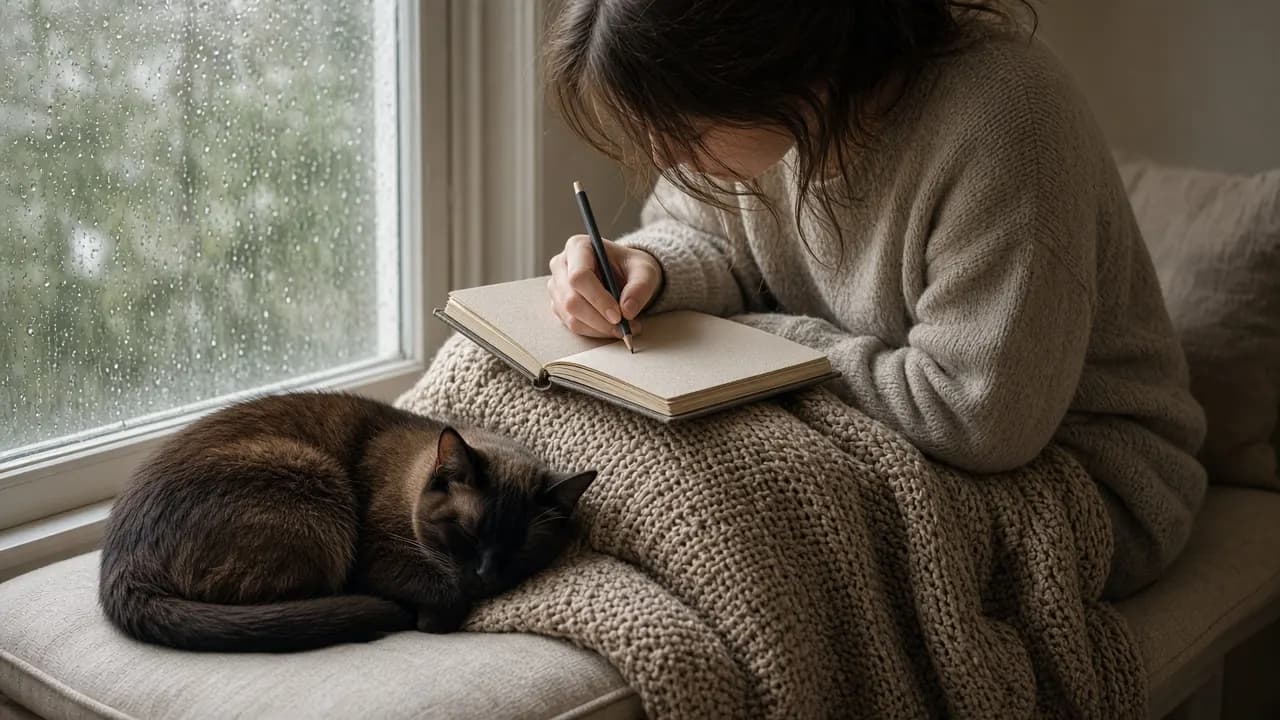
When others are involved
How do you talk about it with your family?
Start with feelings rather than logistics. Ask each person what would help them remember your pet, before you mention freeze-drying. People who react strongly against preservation are often picturing a lifelike animal in the living room; a small partial piece kept in one person's room may feel completely different to them.
Remember that almost everyone in the house loved the pet. One market report says 97%[4] of owners worldwide see their pets as family, and families grieve in different ways. Children can be included in simple terms. Faith and cultural traditions may matter to some members more than others; honoring those isn't a failure of the plan. If you want to know how other households handled it, the poll results show how readers answered.
How did (or would) the people you live with react to preserving your pet?
Tap an answer to vote and see how others answered. Anonymous.
If your pet is still with you
Can you decide before your pet dies?
Yes, and some owners find it easier. If your pet is old or ill, you can look at studios now, ask about suitability, and tell your vet you'd like your pet frozen afterward rather than sent for cremation. It turns a frantic phone call into one sentence on the day.
Planning ahead also gives you time to take photos from every angle while your pet is alive, which a preserver will value hugely. The planning page has broader end-of-life steps, and the preservation cost estimator helps you understand the budget in advance. When you are ready to compare methods, the services overview lays out each one, and our locations pages explain how drop-off works near you.
If you do plan ahead, keep the plan simple and written down: which clinic, which freezer, who makes the call, and the studio's number. Put it somewhere everyone in the house can find it. On a hard day, nobody should have to remember the details from a conversation months earlier.

Free tool
Freeze-dry & taxidermy cost estimator
Estimate cost and waiting time for freeze-drying or taxidermy by size and pose.
Living with the choice
What if you regret your decision later?
Regret is most common when a choice was rushed or made for someone else's comfort. That's why taking a few days matters. If you choose preservation and later find it hard to look at, the piece can live in a quieter spot or a covered case. If you choose cremation and later wish you'd kept more, a print or fur you took beforehand often eases that.
If grief is weighing on you heavily months later, reach out for support; nearly one in three owners in one study were still grieving at six months[5]. By our estimate, applying a UK study's rate to US pet cremation numbers, roughly 110,000 US pet owners a year may go on to meet the criteria for prolonged grief disorder[6]. Free lines such as the Tufts Pet Loss Support Helpline and Cornell's Pet Loss Support Hotline are a gentle first call. Our guide to grief while preservation takes months covers the waiting period. And whenever you're ready, send us your pet's details for options without any deadline.


Reader polls
What would you choose?
Vote anonymously and see how other readers answered. The results are live counts from people who visit this site, so they show real opinions, not a scientific sample.
How did (or would) the people you live with react to preserving your pet?
Tap an answer to vote and see how others answered. Anonymous.
If you were preserving your pet, which route would you lean toward?
Tap an answer to vote and see how others answered. Anonymous.
What helped you most in the first weeks?
Tap an answer to vote and see how others answered. Anonymous.


Questions people ask
Is it weird to want my pet preserved?
No. People have preserved beloved animals for centuries, and freeze-drying has made it more accessible. It's less common than cremation, but wanting to keep your pet's physical form is a natural expression of love. What matters is whether it will bring you comfort, not what others might think.
How long can I take to decide?
If your pet is properly frozen, you can usually take weeks. Most practitioners are comfortable with a pet that was frozen quickly and kept solidly frozen. Without freezing, the window closes within hours to a day or two. Freezing costs you nothing in terms of options.
My partner is against preservation. What can we do?
Talk about what each of you is picturing and what worries you. Often a compromise appears: a partial piece like a paw, a cast, or a preserved pet kept in one person's private space. Freeze your pet while you talk, so the conversation isn't under time pressure.
Will preserving my pet make grief last longer?
There's no good evidence either way, and people differ. Some find a preserved pet gives grief a focus and helps it settle; others find it keeps the wound open. Grief is shaped far more by how close you were than by the aftercare you chose. Be honest with yourself about which you're likely to feel.
Should I ask my vet for advice on preservation?
Your vet can help with freezing and with what happened medically, which a preserver will want to know. Many vets have little experience with preservation itself, so for questions about method, pose and results, a practitioner is the better source. Ask your vet to hold your pet frozen while you find one.
Should children have a say in whether we preserve our pet?
They can have a voice without carrying the decision. Ask older children how they'd like to remember the pet and whether seeing a preserved body would comfort or upset them. Younger children often respond best to something they can hold, like a paw print. The final call belongs to the adults.


Sources and our estimates
- [1] 66.9% of respondents were surprised by how intense their grief was after losing a pet. RSPCA — Pet Loss Survey Results, 2026.
- [2] 75.4% of RSPCA pet-loss survey respondents experienced anticipatory grief before their pet died. RSPCA — Pet Loss Survey Results, 2026.
- [3] 57.1% felt they had to hide their grief after a pet died, and 57.8% perceive stigma around pet loss. RSPCA — Pet Loss Survey Results, 2026.
- [4] Mordor Intelligence reports that 97% of owners globally regard pets as family members. Mordor Intelligence — Pet Funeral Services Market report page, 2025.
- [5] A 2009 Bulletin of the Menninger Clinic study of 106 pet owners found nearly 1 in 3 grieved for at least six months. SHRM — Grieving a Pet's Death: Should Workers Get Time Off? (2016), 2009.
- [6] Each year about 110,000 U.S. pet owners may go on to meet prolonged grief disorder criteria after a pet dies. Our estimate: 1.5M pet cremations (proxy for pet deaths with an engaged owner) x 7.5% PGD rate. How we calculate.
Get options to consider at your own pace
Tell us what you need and where you are. We'll reply by email with clear options and prices so you can decide in your own time.