Displaying and caring for a preserved pet so it lasts for decades
A preserved pet lasts best in a dry, stable room, out of direct sunlight, with regular light dusting and an occasional check for moths or beetles. Freeze-dried pieces are the most sensitive to damp, taxidermy is sturdier, and bones are the most forgiving of all.
By the Pet Taxidermy & Preservation Services editorial team · Updated September 24, 2026 · 4 min read · Sources
- Where to put a preserved pet, and where not to
- Gentle cleaning without damaging fur or feathers
- Warning signs that mean call the studio
The short version
What damages a preserved pet over time?
Three things do almost all the harm: light, moisture and insects. Sunlight bleaches fur and feathers over months, so a black cat on a sunny windowsill slowly turns brown; the Canadian Conservation Institute's guide to light damage explains how museums limit light on fragile natural materials for the same reason. Damp is the big risk for freeze-dried pets, because tissue that had its water removed can slowly draw it back in. And clothes moths and carpet beetles will happily eat fur, feathers and skin if they find them.
Knocks and handling come a distant fourth. Freeze-dried pets are light and a bit brittle at the ears, whiskers and toes; a tumble off a shelf can break them. Most people reading this will be caring for a freeze-dried piece, since one market report puts that method at 62.3%[1] of the preservation market.
Placement
Where is a good place to display a preserved pet?
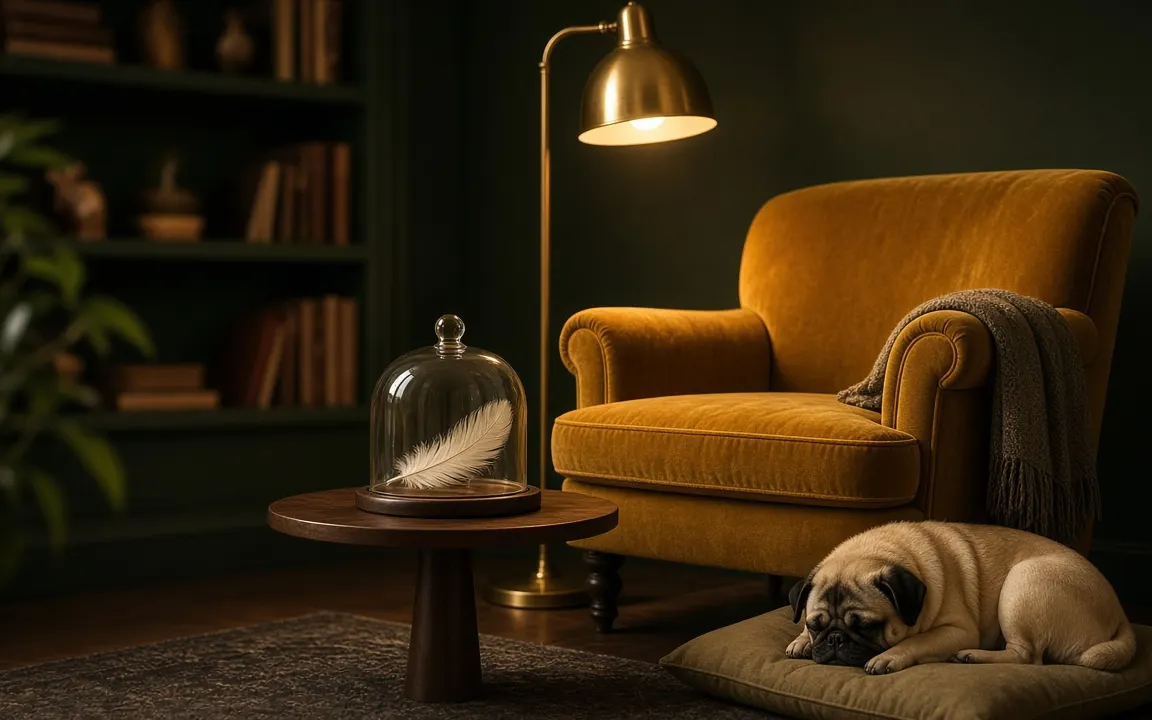
A living room, bedroom or study that stays at a steady, comfortable temperature, away from windows and heat sources. Many owners choose their pet's old favorite spot, and that works well as long as it isn't in the sun.
It helps to choose the spot before the piece comes home, while you're still waiting on the studio. Owners who have a shelf cleared and a case ready tend to find the homecoming calmer; our guide to the waiting months has more on preparing for that day. The poll results show where other readers keep theirs.
| Usually fine | Better avoided |
|---|---|
| Bookshelf or sideboard in a living room | Sunny windowsills and glass sunrooms |
| Bedroom dresser or bedside table | Bathrooms and laundry rooms |
| Inside a glass or acrylic case | Basements, garages and attics |
| An interior wall away from radiators | Above radiators, fireplaces or heat vents |
| A room you use daily, so you notice changes | Kitchens, where grease and steam settle |
Where would a preserved pet live in your home?
Tap an answer to vote and see how others answered. Anonymous.
Protection
Do you need a display case?
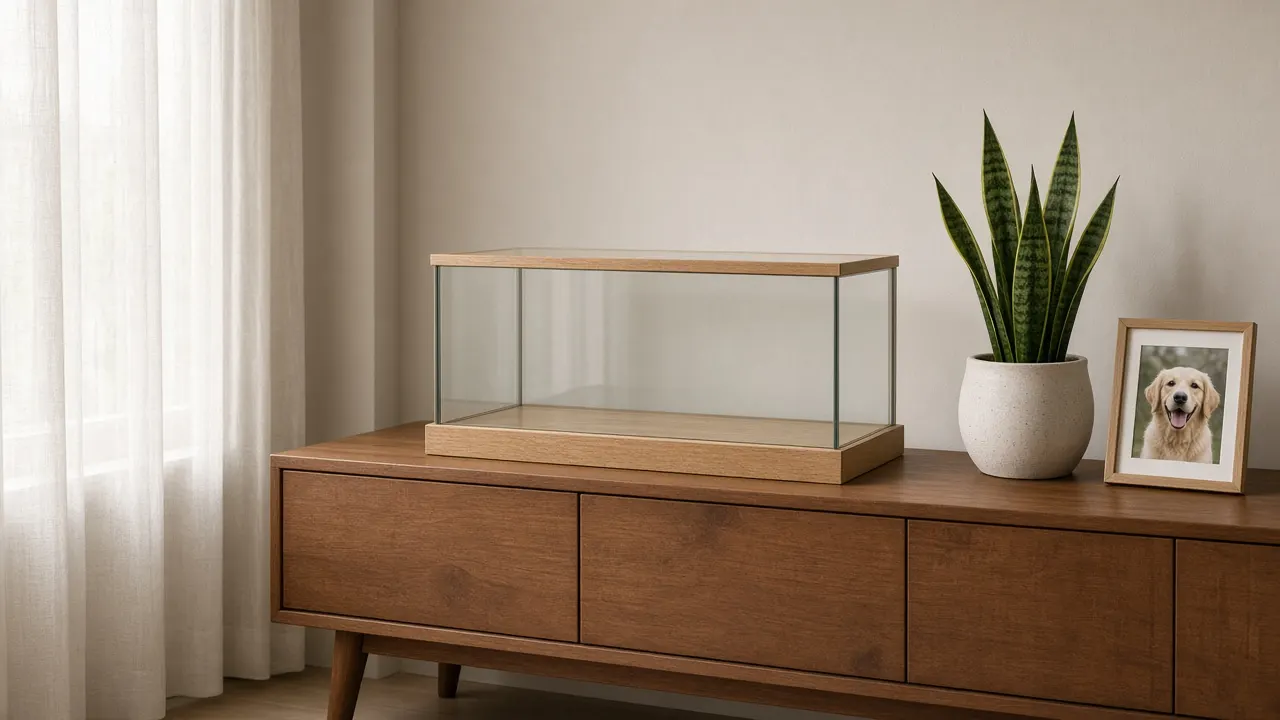
It isn't essential, but it's the single most useful thing you can buy. A case keeps dust off, stops curious cats, dogs and toddlers from touching, and makes it much harder for moths to reach the fur. Acrylic cases with UV-filtering panels give extra protection against fading.
Many studios sell cases and bases. One price guide says custom bases and positioning add-ons typically cost $150–$800[2], and one UK skeleton studio charges £550 for an articulated cat or £700 with a case[3]. When freeze-drying a 10 lb cat might, by our estimate, cost USD 2,291–2,585[4] at one studio's published prices, a case is a modest way to protect it. Add it to your plan in the memorial budget planner.

Free tool
Memorial budget planner
Add up cremation, urn, keepsakes and a farewell so the total holds no surprises.
Everyday care
How should you clean a preserved pet?
- Dust every few weeks with a clean, soft makeup brush or a feather duster, stroking in the direction the fur lies.
- For deeper dust, a hair dryer on the cool, low setting held at arm's length lifts it out of the coat.
- Never use water, sprays or cleaning products. Moisture is the enemy, especially for freeze-dried pets.
- Don't brush against the grain or tug at knots; fur can pull out of dried skin.
- Wipe glass eyes very gently with a barely damp cotton swab, then dry immediately.
- For bones, a soft brush is enough; avoid bleach, which weakens them.
Keeping it safe
How do you protect against moths, beetles and damp?
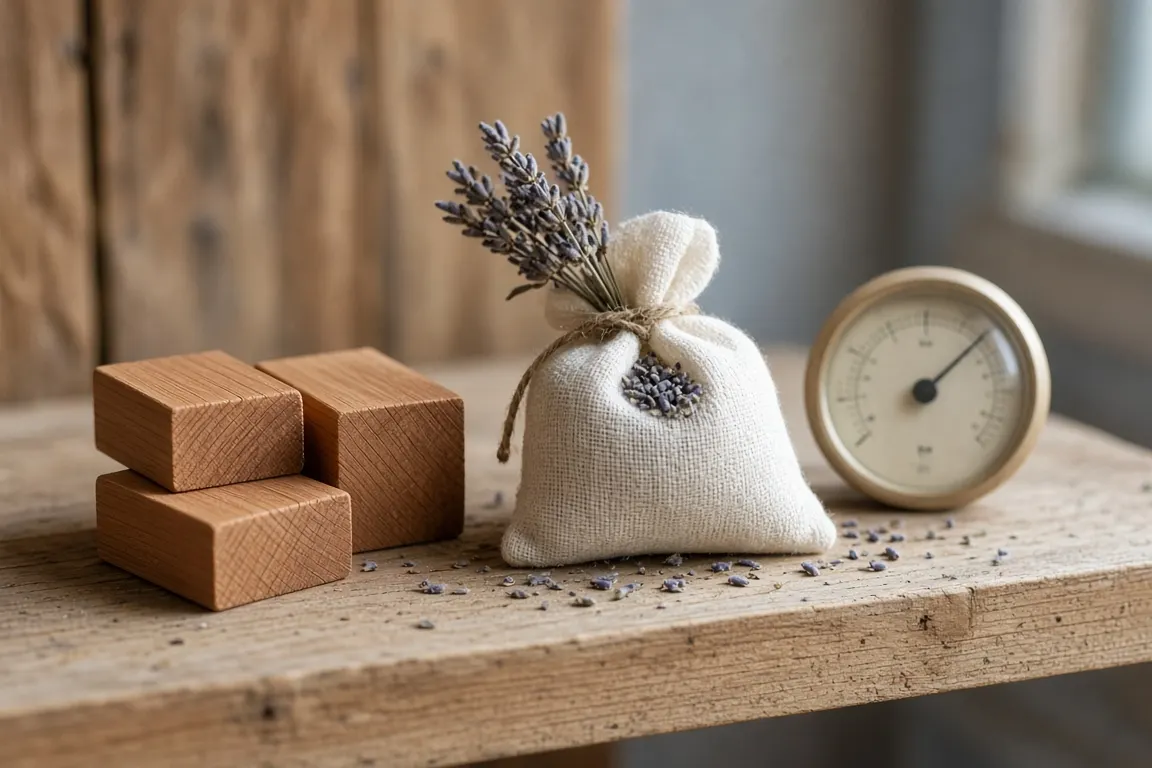
Check under the fur every month or two, especially at the belly and between the toes. Signs of trouble are tiny holes, loose tufts of fur on the base, fine powder, or small larvae casings. Cedar blocks or lavender sachets nearby can deter moths. If you spot activity, bag the piece in a sealed plastic bag and call the studio before trying anything yourself. The University of California's pest pages on clothes moths and carpet beetles show what the larvae and damage look like.
For damp, a cheap hygrometer from a hardware store tells you whether a room is humid. If it regularly reads high, move the piece or run a small dehumidifier. A musty smell, softening skin or a white bloom on the nose are signs moisture has got in. Our overview of what freeze-dried pets look like explains how a healthy piece should look and feel. For the wider picture, the Canadian Conservation Institute's page on relative humidity explains how damp and mold attack natural materials over time.
Over the years
What about repairs, moving house and passing it on?
Small repairs are usually possible. Studios can re-glue a broken whisker, re-color a nose that has faded, or treat a pest problem. One UK freeze-drying guide puts painting and airbrushing touch-ups at about £200–£500[5]. Contact the original studio first; if they're no longer working, another experienced preserver can often help. Our vetting guide applies to repairs too. If the original studio is far away, our locations pages explain how owners handle the distance.
When you move house, carry the piece yourself in a padded box rather than sending it with the movers. And it's worth deciding, gently, who would look after it in the future. Some families write it into their wishes; others plan for the piece to be cremated or buried alongside them one day. The services page and our freeze-drying vs taxidermy comparison explain how durable each method is if you're still choosing.

Reader polls
What would you choose?
Vote anonymously and see how other readers answered. The results are live counts from people who visit this site, so they show real opinions, not a scientific sample.
Where would a preserved pet live in your home?
Tap an answer to vote and see how others answered. Anonymous.
What would matter most to you in a preserved pet?
Tap an answer to vote and see how others answered. Anonymous.
What personal touch matters most on a memorial?
Tap an answer to vote and see how others answered. Anonymous.


Questions people ask
How long does a freeze-dried pet last?
Decades, if it's kept dry, out of the sun and free of pests. Freeze-dried tissue is stable as long as it doesn't take on moisture. Pieces kept in humid rooms or in direct sunlight age much faster, with fading fur and softening skin. A case and a sensible spot make the biggest difference.
Can I let my other pets near the preserved one?
Supervise them at first. Some dogs and cats sniff and then ignore a preserved companion; others try to groom, play with or carry it, which can damage ears and whiskers. A glass case or a high shelf removes the worry. Watch for any stress in a pet who seems to be searching.
What should I do if my preserved pet starts to smell?
A smell usually means moisture has got in or the preservation wasn't fully complete. Move it to a dry room, don't try to wash or spray it, and contact the studio. Many will assess it and may be able to re-dry or treat it. The sooner you act, the easier it is to fix.
Can a preserved pet go outside or be taken to a grave?
It should stay indoors. Sun, rain, temperature swings and insects will damage it quickly outdoors. If you want your pet at a graveside or in the garden, consider a memorial stone or a cast there instead, and keep the preserved piece inside.
Is it safe to have a preserved pet around children?
Yes, preserved pets are safe to be around. The main risk is to the piece, not the children, since small hands can break ears and whiskers. Explain gently what it is, let children look and stroke it with you, and keep it in a case or out of reach day to day.
Should I insure a preserved pet?
If it cost a significant amount, it's worth checking whether your home contents policy covers it against accidental damage, fire or theft. Keep the studio's invoice and a few photos as a record. Replacement is impossible, but a payout could cover professional repair work after an accident.


Sources and our estimates
- [1] Freeze-drying accounted for 62.3% of the pet preservation services market. Astute Analytica via GlobeNewswire — Global Pet Preservation Services Market to Hit USD 112.7 Million by 2032 (Apr 2, 2024), 2023.
- [2] Taxidermy and freeze-drying add-ons such as custom bases or positioning cost about $150–$800. Memorials.com – Pet Taxidermy Guide, 2025.
- [3] UK studio Skeletons UK articulates pet skeletons from £500 (Chihuahua) to £2,000 (Great Dane); a cat costs £550, or £700 cased. Skeletons UK – Pet memorials, 2026.
- [4] Freeze-drying a 10 lb cat at one published price list would cost about USD 2,290–2,590. Our estimate: Low: 2,095 + 49 x (10-6) lb; High: 2,095 + 49 x 10 lb. How we calculate.
- [5] Painting and airbrushing touch-ups on a freeze-dried pet can add £200–£500. AK Mountain Dog – Freeze Dried Pets Cost Breakdown, 2025.
Ask about cases, repairs or new preservation
Tell us what you need and where you are. We'll reply by email with clear options and prices so you can decide in your own time.